
What if the fastest way to rank sooner is to stop chasing shortcuts? In a world obsessed with instant wins, many teams overlook the simple, unglamorous realities of search things that explain why seo takes time and why it’s still worth the wait. In this guide, we’ll show you the real levers search engines respond to in 2025, how to diagnose bottlenecks, and how to responsibly compress the timeline without cutting corners.
You’ll learn:
- The honest answer to “how long does SEO take?” in 2025
- The mechanics behind crawling, indexing, ranking, and re-ranking (and how to move faster)
- The core factors that explain why seo takes time (competition, content depth, links, tech)
- A practical framework to earn trust, build topical authority, and improve Core Web Vitals
- How to set expectations, track the right leading indicators, and know when to pivot
- Tools, checklists, and FAQs to help you move from theory to results
Want an expert audit and roadmap tailored to your site? We’re here to help at Ghodkes: https://ghodkes.com/
The Simple Answer: How Long Does SEO Take in 2025?
You’ll see plenty of bold promises online. Here’s a grounded view for most sites:
- Low-to-medium competition topics: 3–6 months for steady traction, sometimes faster with strong execution.
- Medium-to-high competition verticals (SaaS, finance, health, legal, ecommerce): 6–12+ months to break into page one and stabilize.
- New domains or major migrations: Expect the longer end due to trust-building, crawl discovery, and ongoing re-evaluation.
Those timeframes feel slow because of how search actually works. To understand why seo takes time in the real world, you need to look under the hood.
References for fundamentals:
- Google Search Essentials: https://developers.google.com/search/docs/fundamentals/search-essentials
- Ranking systems overview: https://developers.google.com/search/docs/essentials/ranking-systems
The Mechanics That Explain Why SEO Takes Time
Search engines don’t “set and forget.” They discover, render, evaluate, and constantly re-rank pages against evolving competition and user behavior. That cycle explains why seo takes time even for well-optimized sites.
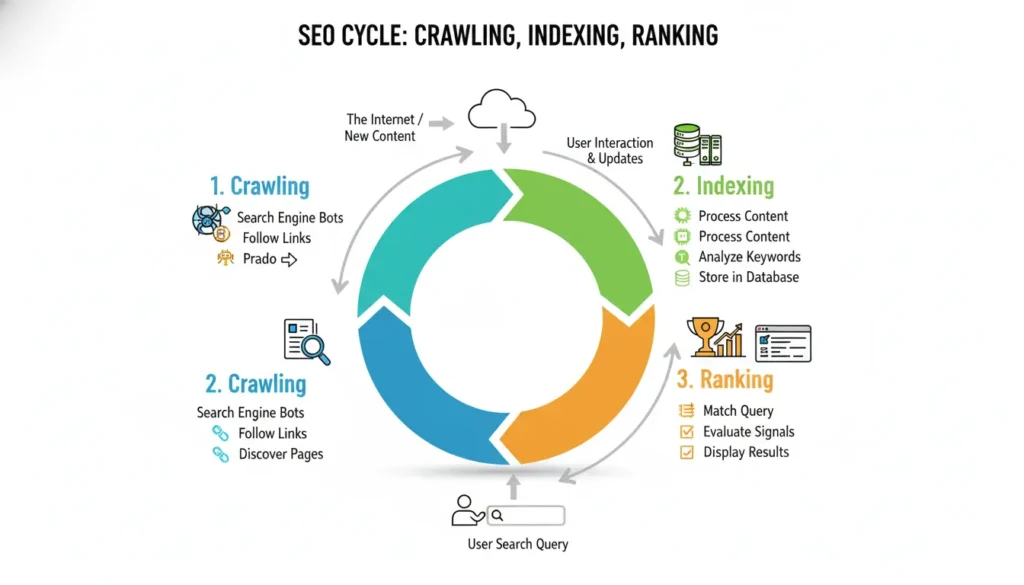
Crawl → Render → Index → Rank → Re-rank
- Crawl: Bots find URLs via links, sitemaps, and prior knowledge. Crawl budget limits how much they’ll grab per visit.
- Render: Engines fetch HTML, CSS, and scripts to “see” the page. Heavy or blocked assets delay understanding.
- Index: The page joins an index if it’s unique, valuable, and allowed by directives.
- Rank: Signals (relevance, quality, experience, links) determine ordering for queries.
- Re-rank: As users engage, competitors publish, and updates roll out, results shift.
Each step has its own latency. Fixes today often materialize in data weeks later. That delay is a big part of why seo takes time.
Learn more:
- Crawling and indexing: https://developers.google.com/search/docs/crawling-indexing/overview-google-indexing
- Crawl budget for large sites: https://developers.google.com/search/docs/crawling-indexing/large-site-managing-crawl-budget
The Big 7 Factors Behind Slow (or Fast) SEO Timelines
If you grasp these, you’ll understand exactly why seo takes time and how to speed it up responsibly.
1) Competitive Landscape and Keyword Difficulty
- Strong incumbents with deep topical coverage and robust link profiles are hard to displace.
- Head terms carry heavy competition; long-tail queries are faster wins.
- SERP features (People Also Ask, videos, shopping) shrink organic real estate.
How to accelerate:
- Target long-tail and bottom-of-funnel queries first.
- Build topic clusters to signal depth, not just isolated posts.
- Earn PR-driven links to strategic pages and hubs.
2) Topical Authority and Content Depth
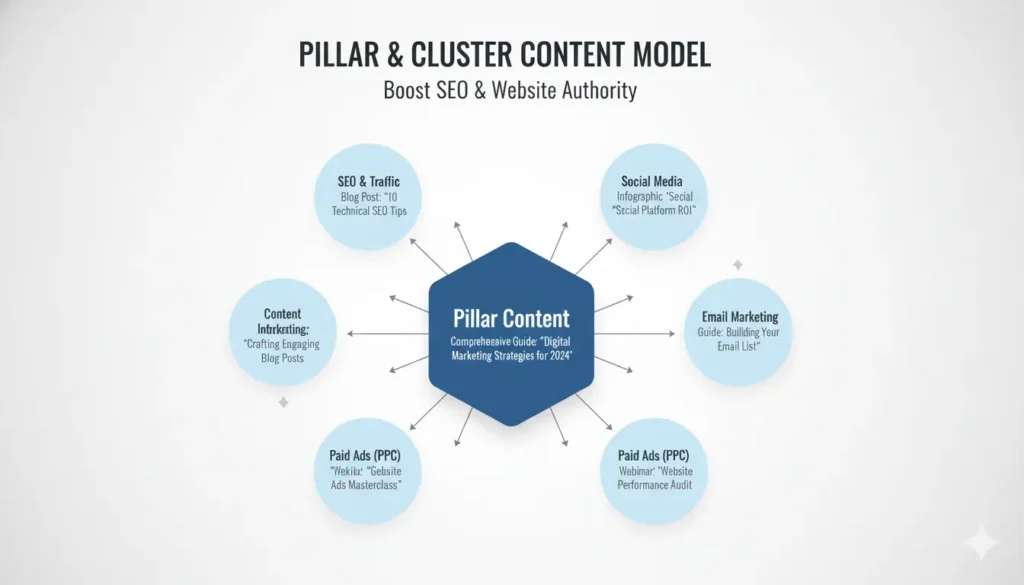
Search engines reward sites that demonstrate breadth and depth around a subject. Without robust coverage, it’s tougher to rank even with great individual pages.
How to accelerate:
- Map “pillar → cluster” content for each core topic.
- Cover buyer journeys: awareness → consideration → decision.
- Refresh and consolidate near-duplicate or underperforming pages.
3) Links, Mentions, and Reputation
Quality, relevance, and natural velocity matter. A slow, consistent pattern of earned links beats sudden spikes. In competitive spaces, this factor is pivotal.
How to accelerate:
- Publish truly useful studies, comparisons, and tools that attract links naturally.
- Pursue digital PR (industry data, product news, thought leadership).
- Strengthen internal linking to funnel equity into priority pages.
4) Technical Health and Page Experience
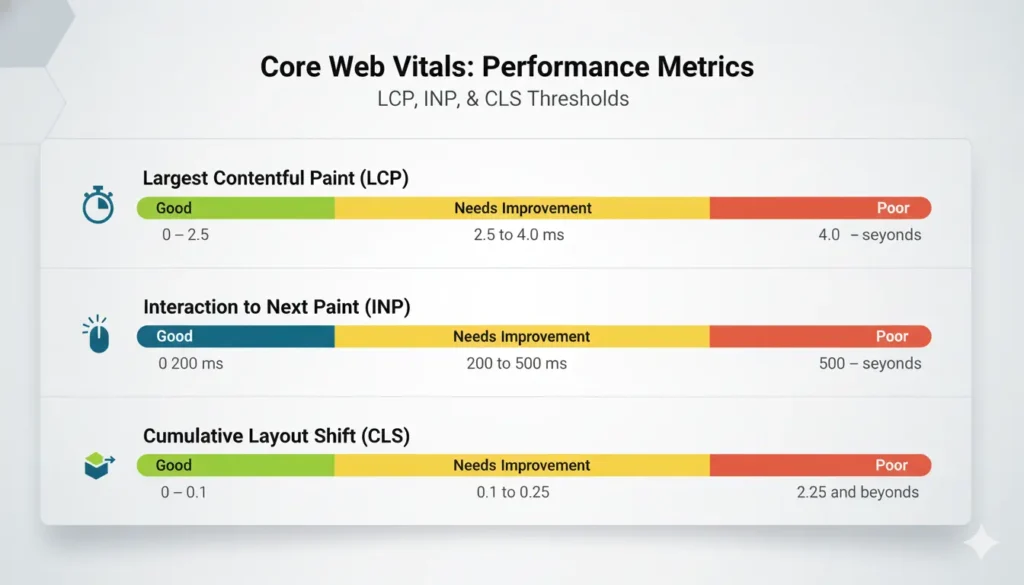
Slow pages, broken redirects, index bloat, or JavaScript rendering issues delay discovery and hurt signals. This is often the quiet reason why seo takes time.
How to accelerate:
- Clean XML sitemaps; fix canonical inconsistencies.
- Improve Core Web Vitals (LCP, CLS, INP). Guidance: https://web.dev/vitals/
- Ensure important pages are indexable, crawlable, and within 3 clicks.
5) Content Quality and Intent Alignment
Even technically perfect pages stall if they don’t match search intent. Misaligned content causes pogo-sticking, weak engagement, and downranking.
How to accelerate:
- Analyze the top-ranking formats (guides, comparisons, tools) and match intent.
- Lead with clarity, not fluff. Add examples, visuals, and unique data.
- Structure content with scannable headings and strong summaries.
6) Domain History and Trust
New domains aren’t penalized they’re simply unproven. It takes time to accumulate signals that show reliability. This trust-building phase contributes to why seo takes time.
How to accelerate:
- Publish consistently on a focused set of topics.
- Build brand signals: About page, team bios, clear contact details, reviews, press mentions.
- Maintain a clean technical profile (HTTPS, no intrusive interstitials, accurate schema).
7) Algorithm Updates and SERP Volatility
Core updates re-weight signals. Product review and helpful content systems emphasize usefulness and expertise. Volatility can reset timelines, another reason why seo takes time.
How to respond:
- Double down on usefulness and experience-led content.
- Maintain technical excellence and transparent editorial standards.
- Monitor Search Console and adjust to shifts in intent or SERP composition.
Page experience guidance: https://developers.google.com/search/docs/appearance/page-experience
The Curiosity Hook: Why “Doing More” Can Slow You Down
Counterintuitive truth: more pages, more keywords, more tools done haphazardly often makes rankings slower. Here’s why:
- Index bloat: Thin or overlapping content confuses canonicalization and dilutes equity.
- Crawl waste: Parameter-based pages and facets steal budget from revenue URLs.
- Mixed intent: Content that tries to rank for everything satisfies no one.
- Technical drag: Heavy scripts, uncompressed assets, and slow servers sap Core Web Vitals.
If you’ve wondered why seo takes time despite “publishing more,” this might be the culprit. Consolidation and focus usually outperform volume for volume’s sake.
A Practical Roadmap to Compress the Timeline (Without Cutting Corners)
This is how to move faster, ethically, and sustainably in 2025.
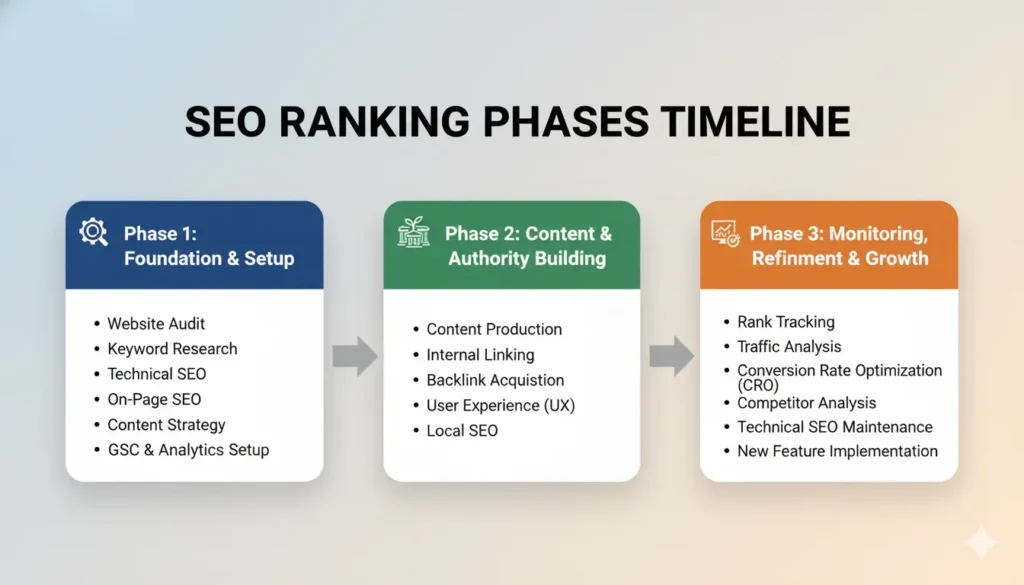
Prioritize What Moves the Needle First
- Capture low-competition, high-intent long-tail queries aligned to products or services.
- Upgrade pages that are already ranking positions 5–20; these can jump quickly with better on-page, links, and UX.
- Fix technical blockers on critical templates (product, service, category, location).
Build Topic Authority with Intent-Led Clusters
- Choose a core pillar (e.g., “Payroll for Startups”), then publish clusters: “setup,” “compliance,” “tools,” “mistakes,” “pricing,” “calculator.”
- Interlink cluster pages to the pillar and to each other with descriptive anchors.
- Add FAQ sections that mirror People Also Ask questions.
Speed Up Crawling and Indexing
- Keep XML sitemaps lean (only canonical 200-status URLs). Docs: https://developers.google.com/search/docs/crawling-indexing/sitemaps/overview
- Strengthen internal links from high-traffic pages to new or strategic pages.
- Use structured data (Article, Product, FAQPage) to improve understanding and visibility.
Improve Page Experience (Core Web Vitals)
- LCP: Compress hero images (WebP/AVIF), preload critical assets, reduce server TTFB with CDN/caching.
- CLS: Reserve space for images/ads, avoid late font swaps, stabilize dynamic components.
- INP: Reduce main-thread JS, defer non-critical scripts, audit third-party tags.
Earn Credibility Faster
- Publish unique data (benchmarks, reports) that attract natural links.
- Guest expert contributions and collaborations in your niche.
- Product-led content (comparisons, “alternatives”) with transparent, unbiased framing.
Align Stakeholders and Expectations
- Share leading indicators (impressions, ranking distribution, index coverage) to show momentum before revenue spikes.
- Explain clearly why seo takes time for competitive queries and how you’re mitigating it.
If you’d like a tailored prioritization plan for your site, we can help: https://ghodkes.com/
Understanding the Lag: Leading vs. Lagging Indicators
One reason teams question why seo takes time is measuring the wrong metrics too early.
- Leading indicators (weeks 2–8)
- Indexation rate of new/updated pages
- Impressions growth in Search Console
- Distribution of rankings (more keywords entering positions 11–30)
- Crawl stats improvement and reduced errors
- Middle indicators (months 2–6)
- Topical coverage completion for first clusters
- Movement into positions 4–10 on target pages
- Click-through rate improvements with better titles/meta
- Lagging indicators (months 4–12)
- Steady page-one rankings on commercial pages
- Qualified organic conversions and revenue
- Referral links from reputable industry sites
Tracking these helps stakeholders see progress, even when revenue lags another practical answer to why seo takes time.
Technical Foundations That Shorten Timelines
Many delays come from foundational issues. Fixing these systematically is a smart answer to why seo takes time.
Architecture and Internal Linking
- Keep vital URLs ≤ 3 clicks from the homepage.
- Use breadcrumb navigation with structured data.
- Add contextual links inside content to relevant clusters and money pages.
Canonicals, Redirects, Robots
- Set one canonical per page and align internal links to it.
- Use 301s for permanent moves; avoid chains (A→B→C).
- Don’t block CSS/JS in robots.txt; avoid noindexing critical templates.
JavaScript and Rendering
- Render core content in HTML when possible.
- Defer non-critical JS and avoid render-blocking resources.
- Consider server-side rendering or pre-rendering for complex frameworks.
Clean Sitemaps and Crawl Budget
- Exclude non-canonical, 404, or redirected URLs from sitemaps.
- Manage faceted navigation to prevent infinite combinations.
- For large sites, monitor crawl stats and server logs to eliminate waste:
Content Strategy That Builds Momentum
Even with perfect technicals, weak strategy slows results another reason why seo takes time. Here’s a plan that earns trust and traction.
Start with Revenue-Relevant Intents
- “Best X for Y,” “X vs Y,” “pricing,” “alternatives,” and “near me” (for local) generally monetize faster.
- Use comparison tables, transparent pros/cons, and real screenshots where relevant.
Nail the Information Gain
- Add something the SERP is missing: data, frameworks, visuals, or firsthand experience.
- Use expert quotes and practical examples to demonstrate experience (E‑E‑A‑T).
Refresh and Consolidate
- Merge near-duplicates; redirect secondary pages to the strongest canonical.
- Update stats, replace outdated screenshots, improve clarity and structure.
- Mark updated dates responsibly; ensure meaningful improvements, not superficial edits.
Myth-Busting: What Doesn’t Shorten the Timeline
Understanding what doesn’t work clarifies why seo takes time.
- “Publishing daily” without strategy: Volume doesn’t equal value.
- Over-optimizing anchors or stuffing keywords: Risks outweigh short-term gains.
- Buying low-quality links: Temporary bumps, long-term problems.
- Disavowing everything: It rarely moves the needle unless you truly have a toxic profile.
- Indexing tricks: Manual requests don’t replace trust and site quality.
When Patience Helps and When to Pivot
If you’re asking why seo takes time for a specific page, evaluate these checkpoints before you overhaul strategy:
- Intent: Does your format match what ranks? If not, redesign the page.
- Coverage: Have you built enough cluster depth to earn topical authority?
- Links: Is the page supported by internal links and at least a few quality external mentions?
- Experience: Are Core Web Vitals within thresholds? Is the page truly usable on mobile?
- Competitive advantage: What’s the distinct value your page adds?
Pivot if:
- You’re off-intent compared to page-one winners.
- The page is isolated with weak internal links.
- You’re targeting a head term without topical depth.
- Technical issues persist (rendering, status codes, canonical conflicts).
Stay the course if:
- Rankings and impressions are trending up gradually.
- You’ve closed gaps vs. competitors and improved vitals.
- You see mid-tail wins and early conversions elsewhere in the cluster.
Measurement, Reporting, and Honest Expectations
Here’s a transparent way to communicate why seo takes time to leaders while proving progress.
- Establish a baseline: current rankings, impressions, CTR, conversions, revenue.
- Define objective thresholds: LCP ≤ 2.5s, CLS ≤ 0.1, INP ≤ 200 ms.
- Build a topic map with milestones: pillar launched, cluster completed, key page refreshed, internal links added.
- Create a monthly cadence:
- Wins: pages moved into top 10; clusters completed; new links earned.
- Risks: indexing issues; slow templates; declining CTR.
- Next actions: precise, owner-assigned, prioritized.
Tools to rely on:
- Google Search Console for coverage, performance, and enhancements: https://search.google.com/search-console
- PageSpeed Insights and Lighthouse for Core Web Vitals: https://pagespeed.web.dev/
- Server logs and analytics for crawl behavior and engagement quality
Quick-Reference Checklist: Accelerate Without Shortcuts
- Strategy
- Identify bottom-of-funnel and long-tail opportunities first
- Map pillar–cluster content and interlink comprehensively
- Ensure every page has a clear intent and information gain
- Technical
- Clean sitemaps with canonical 200 URLs
- Fix canonical/redirect inconsistencies
- Improve LCP, CLS, INP; reduce JS bloat
- Ensure server reliability and fast TTFB; use CDN and caching
- Content
- Write for humans: clarity, examples, evidence
- Add schema (Article, Product, FAQPage, LocalBusiness where applicable)
- Refresh and consolidate underperformers with 301s where relevant
- Links & Authority
- Earn links via data studies, guides, tools, and PR
- Strengthen internal links from high-authority pages
- Build brand trust: transparent About, Contact, credentials, social proof
- Measurement
- Track indexing, impressions, and ranking distribution weekly
- Review search intent against top results monthly
- Annotate changes and correlate with performance shifts
This approach won’t remove all delays, but it will meaningfully compress them making the question of why seo takes time less frustrating and more manageable.
Final Thoughts: Patience with a Plan Wins
You came looking for an honest answer to why seo takes time. Now you know it’s not about waiting it’s about compounding the right actions: technical clarity, intent-led content, strong internal links, and credible mentions. Do those consistently in 2025, and you’ll see rankings rise, stabilize, and turn into revenue.
Ready to Reduce Your SEO Timeline and Get Faster Results?
SEO takes time but with the right strategy, you can cut months off the process.
At Sparxcellence Ghodke’s, we build a roadmap that speeds up crawling, indexing, authority, and conversions.
Get Your Free SEO Strategy Session
✔ Personalized audit
✔ Competitor gap analysis
✔ Keyword roadmap
✔ Action plan for the next 90 days

Book your free consultation now:
https://ghodkes.com/
Prefer a Done-For-You SEO Growth Plan?
We’ll optimize your website, build topical authority, fix technical issues, and improve rankings faster.
Start Growing With Expert SEO Support Today
Helpful resources:
- Google Search Essentials: https://developers.google.com/search/docs/fundamentals/search-essentials
- Ranking systems overview: https://developers.google.com/search/docs/essentials/ranking-systems
- Page experience guidance: https://developers.google.com/search/docs/appearance/page-experience
- Core Web Vitals: https://web.dev/vitals/
- Crawl budget for large sites: https://developers.google.com/search/docs/crawling-indexing/large-site-managing-crawl-budget
- Sitemaps: https://developers.google.com/search/docs/crawling-indexing/sitemaps/overview
Why seo takes time even when I publish great content?
Search engines need to discover, render, and evaluate your pages against established competitors. Trust, topical authority, links, and user signals build gradually.
How long until I see results?
Typical timelines are 3–6 months for low-to-medium competition queries and 6–12+ months for tougher terms. Technical health, content quality, and links can speed or slow that.
Does domain age matter?
Age itself isn’t a ranking factor, but older sites often have more links, content depth, and brand signals practical reasons why seo takes time for new domains.
Can technical fixes alone speed things up?
They remove bottlenecks but don’t replace relevance and authority. Pair technical wins with intent-aligned content and smart link building.
Will publishing more content help?
Only if it adds genuine value and supports a clear topic map. Thin or overlapping pages slow you down another reason why seo takes time.