

If you’ve ever wondered “what is social media marketing and why do some brands grow while others stall?”, here’s a curiosity spark: most teams post more than their customers actually want, and measure less than their finance team needs. In 2025, the brands that win are not the loudest; they’re the clearest. They show up where their audience already spends time, add value in native formats, and connect every post to a next step they can measure.
This guide explains what is social media marketing in plain English. You’ll get a step‑by‑step strategy framework, channel‑by‑channel best practices, creative examples that work now, measurement and KPIs without jargon, and the pitfalls that quietly drain budgets. It’s written for busy founders, marketers, and social managers who need a dependable system not just a list of tips.
Table of Contents
What Is Social Media Marketing? (Definition You Can Share)
What is social media marketing? It’s the strategy and execution of using social platforms to reach your target audience, deliver helpful or entertaining content, build trust, and move people to a next step subscribing, booking, buying, or advocating while proving the impact with clear metrics.
Three things make this more than “posting a lot”:
- A plan: goals, audience, and editorial calendar aligned to business outcomes
- Channel‑native content: formats and messages built for each platform’s feed and culture
- Measurement: clean tracking that shows how your work affects revenue, not just likes
When someone asks what is social media marketing in digital marketing, the most accurate answer is: it’s how you use social channels to create useful, native experiences that directly support your growth goals measured, not guessed.
Why 2025 Changes Your Playbook
- Short‑form video is the default consumption pattern. Your first 2 seconds matter more than your next 20.
- Search is happening inside social. Users type “how to,” “best,” and “near me” directly in platform search bars.
- Feeds reward satisfaction. Saves, shares (especially to DMs), and completion rates drive distribution more than vanity likes.
- Social is a service desk. Customers expect replies inside the app.
- Commerce moved in. Shoppable posts, in‑app checkout, and creator storefronts reduce steps between discovery and purchase.
In short, what is social media marketing in 2025? It’s native storytelling plus real service, glued to your funnel with data.
Strategy Framework: Goals → Audience → Channels → Content → Distribution → Measurement
Start with a system, not a channel.
1) Goals (tie to business outcomes)
- What will change in 90 days if this works more demos, higher AOV, shorter sales cycles, lower CAC?
- Pick one primary goal per channel: awareness, demand, or retention.
- Define a clear call‑to‑action (CTA) for each stage save, share, comment (“guide”), click, book, buy.
2) Audience (fit first)
- Build buyer personas: roles, jobs‑to‑be‑done, pains, objections, and preferred platforms.
- Study platform search and competitor comments to hear language in the wild.
3) Channels (choose on purpose)
- Two excellent channels beat five inconsistent ones.
- Match platforms to your buyers (see “Platforms in 2025” below).
4) Content (native, helpful, repeatable)
- One content pillar per month; ship in native formats (Reels/Shorts, carousels, live).
- Build an editorial calendar with series (e.g., “3 ways Wednesdays,” “Myth Monday,” “Customer Story Friday”).
5) Distribution (half the work)
- Post timing, creators, partners, and groups/communities.
- Repurpose across platforms with edits, not lazy cross‑posts.
6) Measurement (remove guesswork)
- Use UTMs and platform tracking.
- Review weekly; keep what pays and stop what doesn’t.
This is the backbone behind the question “what is social media marketing as a repeatable growth system?”
Audience & Buyer Personas: Fit First
Great creative fails if it’s aimed at the wrong person. For each persona, document:
- Goals: what they’re trying to achieve this quarter
- Frictions: time, budget, fear of risk, too many options
- Triggers: what event makes your offer urgent (e.g., seasonality, new manager, personal milestone)
- Questions: “How does it work?” “How long?” “What’s the guarantee?”
- Platforms: where they scroll and why (education, entertainment, community, shopping)
Create content that meets them where they are education for early scrollers, comparisons and proof for evaluators, offers and convenience for shoppers.
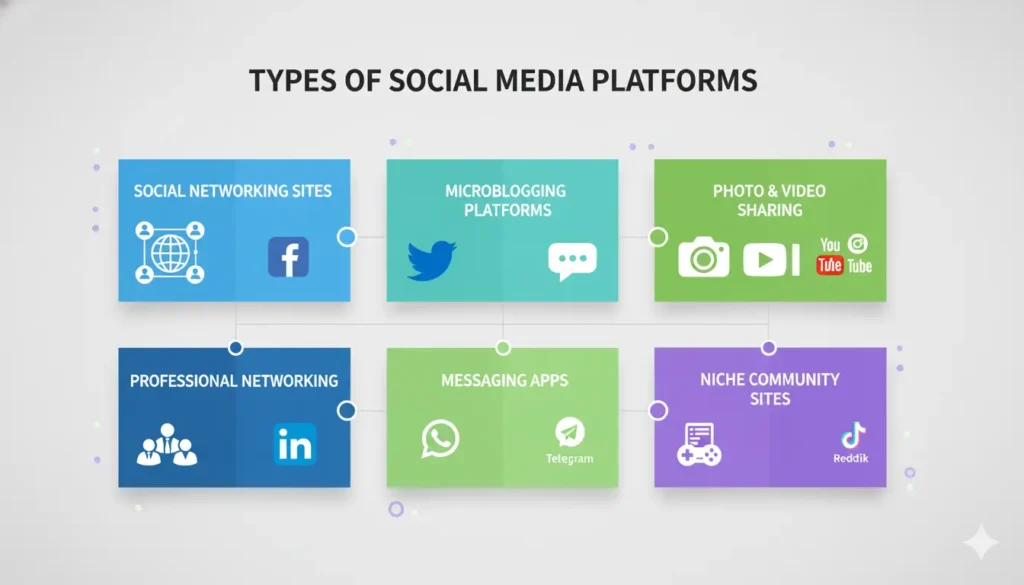
Platforms in 2025: Where Each Channel Shines
- Best for: lifestyle brands, creators, services with visual proof
- Formats: Reels (reach), Stories (intimacy), carousels (education), Shop (purchase)
- Tips: hook in 0–2 seconds; captions on; CTA in last frame; creator collabs
- Best for: broad reach, older demos (30–65+), local services, groups
- Formats: Feed, Reels, Stories, Groups, Marketplace retargeting
- Tips: utility‑led creative; social proof near the top; combine with retargeting
TikTok
- Best for: product discovery, trend‑driven stories, younger and growing multi‑gen
- Formats: short videos, native effects, responses to comments
- Tips: creator POV, jump cuts, honest demos; encourage comments (“comment ‘guide’”)
YouTube
- Best for: search‑led education and product research
- Formats: Shorts (reach), long‑form (depth), live (events), Community posts
- Tips: “How to” and “X vs Y” rank well; push Shorts viewers into long‑form with end cards
- Best for: B2B, recruiting, leadership brands
- Formats: text posts, carousels, short videos, articles, events
- Tips: tell stories with numbers; share frameworks; engage in comments early
- Best for: planning home, style, recipes, weddings, travel
- Formats: pins, idea pins, shoppable pins
- Tips: vertical imagery with text overlays; link to detailed guides or PDPs
X (formerly Twitter), Reddit, Threads, WhatsApp, and Communities
- Use cases: niche communities, fast feedback, customer support, broadcast + chat
- Tips: be conversational; prioritize service and truthful updates; avoid brand‑only monologues
Your mix should reflect where your buyers already spend attention and where your resources can produce channel‑native content consistently.
Content Formats That Work (With Examples)
Short‑Form Video (Reels/Shorts/TikTok)
- Hooks: “I wish I knew this before…,” “3 mistakes with…,” “Watch me fix…”
- Pacing: new visual every 1–3 seconds; captions on; end with one CTA
- Examples: 15‑second product demo; 30‑second case step‑through; creator “day in the life”
Carousels
- Use: mini‑guides, “X vs Y,” before/after, process steps
- Structure: Frame 1 = promise; Frames 2–7 = proof/steps; Final frame = CTA
Stories
- Use: behind‑the‑scenes, quick offers, polls, link stickers, Q&A
- Tip: build sequences (tease → reveal → swipe)
Live
- Use: launches, AMAs, tutorials, interviews
- Tip: announce ahead, capture emails, save and segment clips afterward
Text/Graphics
- Use: checklists, price breakdowns, comparisons
- Tip: high‑contrast typography; keep it skimmable
Content that works in 2025 is useful, specific, and clearly tied to a next step.
Organic vs Paid: When to Boost and How Much to Spend

- Organic builds credibility, compounding engagement, and insights.
- Paid amplifies winners, fills the funnel, and scales revenue.
When to boost
- Posts with high saves/shares within 24–48 hours
- Key offers with strong proof (limited‑time bundles, new arrivals with waitlist)
- Creator content with organic traction (whitelisted ads)
Budget pointers
- Start with
50/day on top performers; run 3–5 days
- Allocate 70% to proven ad sets, 20% to promising tests, 10% to experiments
- Track cost per action (CPL, CPA) and revenue per 1,000 impressions (RPM) to compare platforms fairly
Paid ads work best when your creative is native and your landing pages are fast, focused, and mobile‑first.
Community Management & Customer Care
Social is often the first service touchpoint. Treat it like a storefront.
- Reply fast: within the first hour if possible; same day at minimum
- Tone: human, helpful, consistent with your brand
- Routing: move complex issues to DM; provide a short link to support resources
- Moderation: filter harmful terms; hide spam; avoid deleting criticism unless it breaks rules
- FAQ content: turn common questions into posts, carousels, or pinned highlights
A responsive presence earns the most valuable social metric: trust.
Influencer/Creator Collaborations That Convert
Creators help you borrow trust and format fluency.
- Selection: prioritize audience fit, engagement quality, and content style over follower count
- Brief: define outcomes (saves, clicks, code redemptions); give creative freedom with brand guardrails
- Compensation: blended fees + performance bonuses; be transparent
- Tracking: unique links/codes; UTM parameters; landing pages per creator
- Whitelisting: run ads from creator handles for social proof at scale
Think partnership, not one‑off posts. Great creators are long‑term allies.
Social Commerce & Shoppable Experiences
Make buying easy where discovery happens.
- Product tags: add to posts and stories; keep catalogs clean (titles, images)
- In‑app checkout: test if your category and margins fit
- Creator storefronts: co‑create collections with top partners
- Live shopping: limited but powerful for certain verticals (beauty, home)
Measure add‑to‑cart, conversion, and returns across in‑app vs website to decide how much to lean in.
Analytics & KPIs: The Metrics That Matter
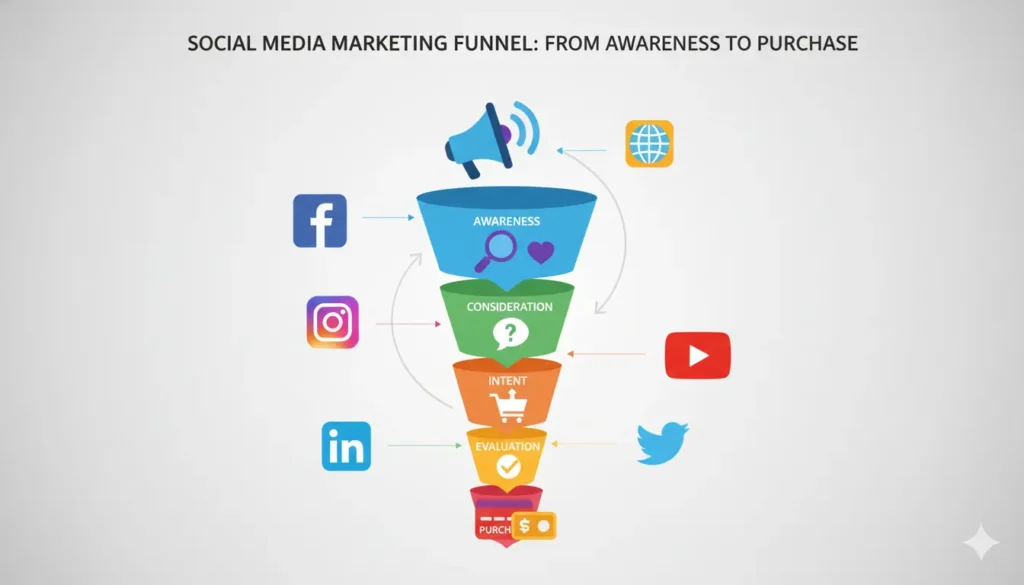
Move beyond vanity metrics. Measure by stage:
Awareness
- Reach & impressions: unique viewers vs total views
- View‑through rate (VTR) for video; 3‑second and 95% completions
- Profile visits and follower growth (quality > quantity)
Engagement
- Saves and shares (DMs count most)
- Comments (quality, not just count)
- Click‑through rate (CTR) to site or store
Conversion
- Landing page views (vs link clicks)
- Add‑to‑cart, leads, purchases, bookings
- Revenue and ROAS (where applicable)
Customer
- Repeat purchase rate, AOV, LTV
- Service metrics: response time, CSAT from social interactions
Attribution reality: compare platform‑reported conversions (modeled) with analytics (click‑through). Use UTMs consistently and annotate key posts. Directional consistency over time matters more than one snapshot.
Tools (Keep the Stack Lean)
- Scheduling & inbox: native planners or a consolidated tool (with moderation and replies)
- Design: lightweight templates for video, carousels, and stories
- Link tracking: UTM builder; short links
- Social listening: monitor brand mentions and category terms
- Reporting: a dashboard with weekly KPIs by platform and campaign
Buy tools to support a process you’ll use weekly not to solve strategy gaps.
B2B vs B2C vs Local: How Your Approach Changes
B2B (especially on LinkedIn & YouTube)
- Focus on frameworks, case snapshots, and comparison content
- Employee advocacy compounds reach
- Lead gen forms vs website forms test both, monitor SQL rate and revenue
DTC/Ecommerce
- Product demos, UGC, creator collabs, and carousels
- Post‑purchase content (care guides, styling tips) drives retention
- Retargeters with dynamic product ads are your margin protectors
Local Services
- Before/after, process clips, neighborhood highlights
- Google Business Profile updates + social proof posts
- Encourage reviews and reply to all; share community involvement
Accessibility, Brand Safety, and Policy Essentials
- Captions: add to all videos by default
- Alt text: descriptive for images; high‑contrast text in graphics
- Music & rights: use platform‑cleared tracks; respect licensing
- Disclosures: #ad/#sponsored for paid partnerships; clear affiliate mentions
- Sensitive categories: follow platform policies on claims (finance, health, housing, employment)
Accessibility broadens reach and builds trust.
Common Mistakes and Simple Fixes
- Same asset everywhere → Edit per platform (aspect, length, copy).
- Posting without CTAs → Add one action: save, share, DM “guide,” visit link.
- Measuring only likes → Track saves/shares, link clicks, adds to cart, leads.
- No UTMs → Tag every link to attribute results.
- Slow pages → Compress, simplify, speed up your best ad can’t fix a slow site.
- Ignoring comments/DMs → Treat as service; log insights to improve content.
- One‑off influencer posts → Build recurring relationships; whitelist best content.
Every fix above compounds within a month.
Conclusion: Turn “What Is Social Media Marketing” Into a System You Trust
By now, what is social media marketing should feel less like a buzzword and more like a dependable system:
- Know your buyers and the outcomes they care about.
- Choose the two channels you can serve natively, consistently.
- Create useful content with clear hooks and clear next steps.
- Reply to people like a neighbor; learn from every comment.
- Measure what matters; amplify only what pays.
Ready to Grow Your Brand with Social Media Marketing? Let’s Make It Happen.
Social media isn’t just about posting — it’s about strategy, consistency, and knowing how to turn followers into real customers.
If you’re ready to:
✔ Build a strong brand presence
✔ Grow your followers organically
✔ Run high-ROI paid campaigns
✔ Increase engagement & conversions
✔ Get a complete content + ad strategy for 2025
Then you’re in the right place.
At SparXcellence Ghodke’s LLP, we help businesses dominate platforms like:
Instagram, Facebook, LinkedIn, YouTube, and TikTok — with data-driven strategies that deliver real results.
Book Your FREE Social Media Marketing Consultation
Let’s analyze your current social presence and build a custom strategy tailored to your business goals.
👉 Schedule your consultation now
🔗 https://ghodkes.com/contact-us/
FAQs
What is social media marketing in one sentence?
It’s the practice of using social platforms to reach the right people with native content, build trust through consistent value, and drive measurable actions like leads, sales, or bookings.
How often should we post?
Quality beats volume. A sustainable cadence is 3–5 posts per week per channel, plus daily comment/DM management. Keep a weekly review to refine topics and hooks.
Which platform should we start with?
Pick the two your audience uses most. For visual products: Instagram + TikTok/Shorts. For B2B: LinkedIn + YouTube. For local: Facebook + Instagram.
Do we need to spend on ads?
Not always but small boosts on top organic performers accelerate learning and scale. Start with 50/day on winners; measure cost per action and revenue per 1,000 impressions.
What’s the most important metric?
Saves and shares forecast reach; clicks and adds to cart forecast revenue. Tie platform KPIs to site actions with UTMs and clean landing pages.