

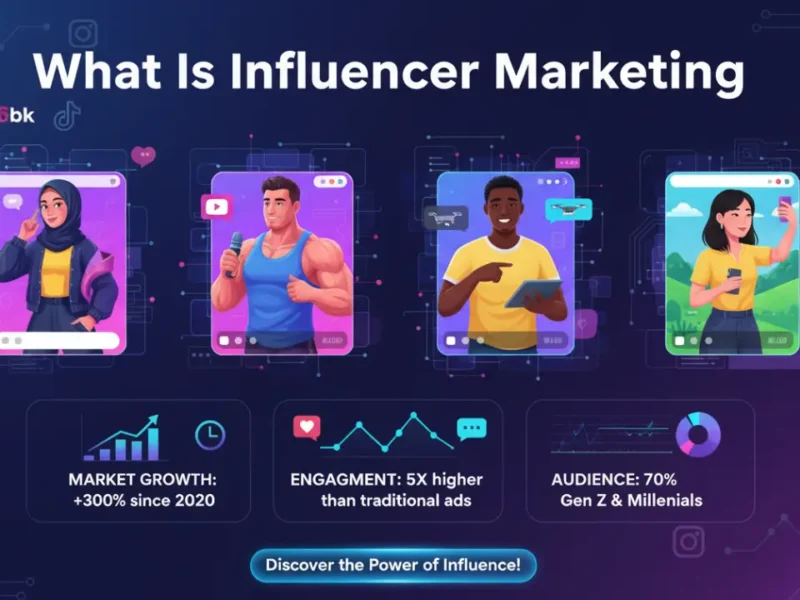
If a 30‑second Reel from a creator with 8,000 followers could outsell your best ad, would you believe it? That curiosity is the first step to understanding what is influencer marketing in 2025: a system for partnering with trusted voices to drive attention, action, and revenue at a cost you can measure and scale.
This guide shows you exactly what is influencer marketing, why it works, and how to use it responsibly. You’ll get real frameworks, budgets, contracts, and measurement tactics, plus platform-specific tips for Instagram, TikTok, and YouTube.
Need help building or fixing your program? Get a tailored plan at Ghodkes: https://ghodkes.com/
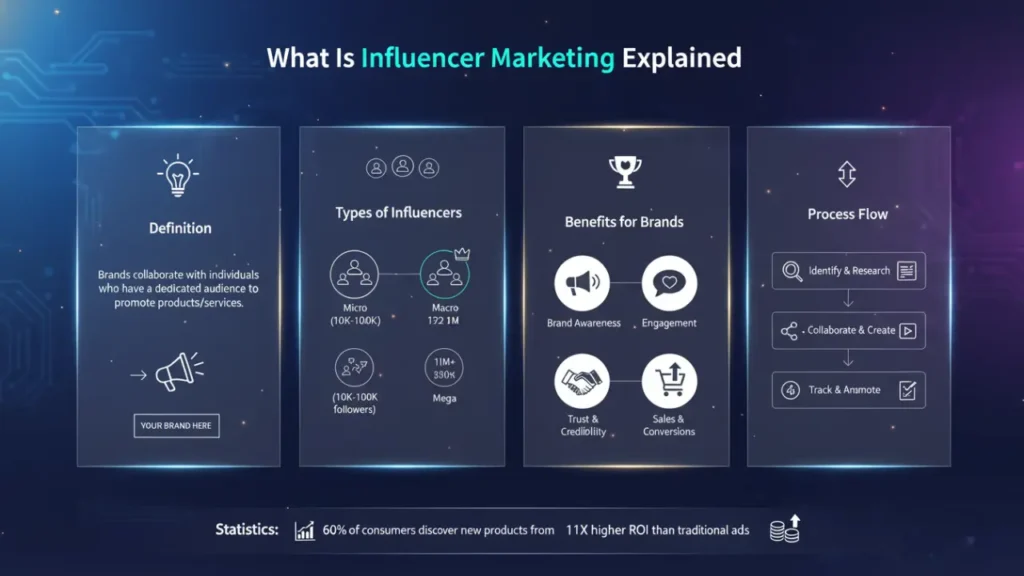
Table of Contents
What Is Influencer Marketing (2025 Definition)
At its core, what is influencer marketing? It’s a partnership where a creator with an engaged audience promotes your product or service in exchange for compensation (fees, commissions, gifting, or a mix). The goal is to borrow trust ethically and transparently so your brand message lands as helpful, not hype.
Key elements that define what is influencer marketing today:
- Relevance: A creator’s audience matches your ideal customer profile.
- Authenticity: Creators present honest experiences not scripts disguised as reviews.
- Measurement: Clear goals (awareness, engagement, leads, sales) tracked with UTMs, promo codes, and first‑party analytics.
- Compliance: Proper disclosures and content rights aligned with FTC/ASA guidance.
Why this matters: Organic reach is unpredictable and paid ads are pricier. Smart influencer collaborations can lower CAC, increase conversion rates, and build brand equity.
Helpful reference:
- FTC Endorsement Guides (disclosures): https://www.ftc.gov/business-guidance/advertising-marketing/endorsements
Why Influencer Marketing Still Works in 2025
Understanding what is influencer marketing means knowing why it still moves the needle:
- Trust transfers faster than ads: People adopt recommendations from creators they already follow.
- Native formats win: Short‑form video (Reels, TikTok, Shorts) and long‑form YouTube tutorials are the modern “word of mouth.”
- Platform preference: Algorithms favor content that holds attention, especially first‑hand demonstrations.
- Privacy reality: With tracking limits, creator channels provide high‑intent, first‑party signals and measurable actions via codes and links.
Outcomes you can expect:
- Lower CPC/CPA when whitelisting creator content in ads
- Higher CTR from authentic demos than polished brand spots
- Faster product education with side‑by‑side “do this, not that” explainers
The Influencer Landscape: Tiers, Formats, and Channels
To apply what is influencer marketing effectively, pick the right partners and platforms.
Influencer Tiers (and where they shine)
- Nano (1k–10k followers): Niche authority, high trust, cost‑effective product seeding
- Micro (10k–100k): Strong engagement, scalable collaborations, solid mid‑funnel impact
- Mid‑tier (100k–500k): Balanced reach and credibility, powerful for launches
- Macro (500k–1M): Mass awareness, significant reach, higher rates
- Mega/celebrity (1M+): Brand fame, splashy campaigns, pricey
Channel fit
- Instagram: Reels, Carousels, Stories, Collab posts; great for lifestyle, beauty, fashion, food, travel, B2C services
- TikTok: Short, fast demos and trends; drives discovery and virality
- YouTube: Tutorials, deep dives, comparisons; drives consideration and high‑intent clicks
- YouTube Shorts: Quick tips and product hooks to feed long‑form
- Pinterest: Evergreen intent (how‑tos, DIY, recipes)
- Twitch: Live demos, gaming, tech
- LinkedIn: B2B influencer marketing with subject‑matter experts
Podcasts: Long‑form trust and repeat exposure (mid‑roll reads convert well)
How Influencer Marketing Campaigns Work (Step‑by‑Step)
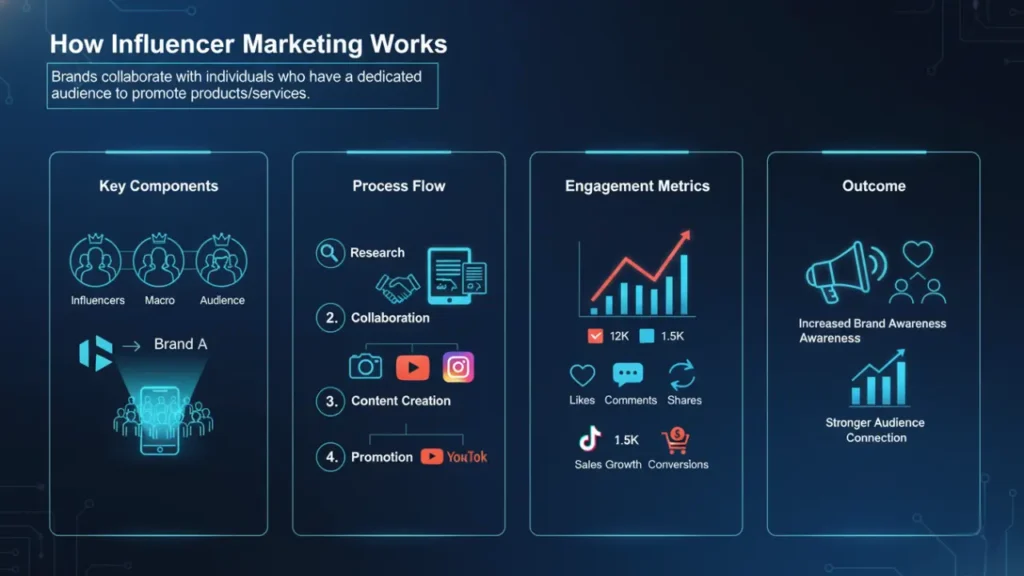
If you’re asking what is influencer marketing beyond definitions, here’s the practical playbook.
1) Clarify goals and guardrails
- Business goal: awareness (reach), engagement (saves, shares), leads (signups), or sales (revenue)
- Target audience: demographics, psychographics, pains/desires
- Constraints: budget, category restrictions, timelines, compliance
2) Audience and topic mapping
- Outline 3–5 content pillars (e.g., “setup,” “benefits,” “comparisons,” “mistakes,” “case stories”)
- List specific outcomes for each pillar (e.g., “Reduce setup time,” “Improve skin clarity,” “Save monthly costs”)
3) Discovery and vetting
- Shortlist creators with:
- Audience match (age, region, interests)
- Engagement rate (benchmarks: Instagram 2–6%, TikTok 3–10%, YouTube 1–4%)
- Content quality and consistency
- Brand safety: past posts, comments, tone
- Vet for authenticity:
- Check for suspicious follower spikes and low average views
- Review audience demographics and top geos
- Scan comments for genuine conversation vs generic emojis
4) Outreach that gets replies
- Personalized DM/email:
- Compliment a specific post
- Explain why they’re a fit for your audience
- Pitch a clear value proposition (product, rate, campaign concept)
- Offer options: paid + affiliate, gifted + bonus, or co‑created series
5) Negotiate deliverables and rights
- Deliverables: number of Reels/TikToks, Stories with links, YouTube integrations, Carousels
- Timelines: production windows and posting dates
- Exclusivity: category or direct competitors, with reasonable duration
- Usage rights: organic only vs paid whitelisting, length, channels, and territories
- Content whitelisting/allowlisting: creator grants ad account access to run Spark Ads/Meta whitelisting from their handle
- Compensation: flat fee, affiliate commission, revenue share, product bundles, performance bonus
6) The influencer brief
- Must include:
- Campaign objective and who the audience is
- Key messages and proof points (not a script)
- Mandatory disclosures (#ad, Paid Partnership tag)
- Visual do’s/don’ts, brand tone, and product specifics
- CTAs, tracking links (UTMs), and unique codes
- Review process and turnaround times
7) Contracts and compliance
- Contract essentials:
- Deliverables, posting dates, approval steps
- Disclosure obligations
- Usage rights and whitelisting permissions
- Exclusivity, takedown clauses, reshoot rules
- Payment terms (50/50 milestones are common)
- Disclosures:
- Clear and conspicuous (#ad, Paid partnership)
- Spoken and on‑screen for video; readable on mobile
- FTC guide: https://www.ftc.gov/business-guidance/advertising-marketing/endorsements
- UK (ASA/CAP): https://www.asa.org.uk/advice-online/recognising-ads-social-media.html
8) Production, approvals, and posting
- Provide a sample script outline, but encourage creator voice
- Approve hooks and claims; ensure no overpromising
- Track posting windows; ensure links and codes work
9) Amplification and repurposing
- Whitelist top posts for Meta ads (keep creator handle)
- Use TikTok Spark Ads for high‑performing creator videos
- Repurpose into email, product pages, retargeting ads, and retail product detail pages
- Build a content library for future campaigns
10) Measure, learn, and scale
- Collect results within 24–72 hours, then at 7 and 30 days
- Log performance by creator, content angle, format, and platform
- Scale winners: more content, longer rights, paid amplification
Influencer Pricing in 2025: What to Expect
Rates vary widely. Here’s a directional view to help you budget and negotiate.
- Nano: $50–$300 per Reel/TikTok; $200–$1,000 per YouTube integration; gifting + bonus common
- Micro: $300–$2,500 per Reel/TikTok; $1,000–$5,000 per YouTube integration
- Mid‑tier: $2,500–$10,000 per Reel/TikTok; $5,000–$20,000 per YouTube integration
- Macro/Mega: $10,000+ per short video; $20,000–$100,000+ per long‑form integration
Variables that affect price:
- Production quality and editing effort
- Deliverables count (bundles discount unit cost)
- Usage rights duration (90 days vs 1 year vs perpetual)
- Whitelisting rights (commonly +20–50%)
- Exclusivity scope and timeline
- Performance bonuses
Pro tip: Anchor to outcomes. When you know what is influencer marketing at its best profitable performance you can negotiate with ROI in mind (e.g., target CPA or ROAS thresholds).
Creative That Converts: Hook, Proof, CTA
Creators win by teaching, showing, and proving. Steal these structures:
- Hook templates
- “If you struggle with [pain], this saves you [time/money]…”
- “3 things I wish I knew before buying [category]…”
- “We cut [metric] by [X%] here’s the setup…”
- Formats that work
- “Do this, not that” side‑by‑side
- Unboxing + 3‑step setup
- Before/after with on‑screen steps
- “Alternatives to [competitor]” with fair pros/cons
- Mini case study with real numbers
- Calls‑to‑action
- “Use code [NAME] for 15% off link in bio”
- “Grab the template in my profile; takes 60 seconds”
- “DM me ‘Checklist’ and I’ll send the link”
Remember: the goal isn’t to read a script; it’s to answer a real question the audience already has about your product. That’s the heart of what is influencer marketing.
Measurement: How to Prove ROI
A modern answer to what is influencer marketing includes measurement you can trust.
- Tracking foundations
- UTMs on every link (source=instagram/tiktok/youtube, medium=influencer, campaign, content, creator)
- Unique discount codes for each creator
- Dedicated landing pages (faster load + message match)
- GA4 goals for signups, purchases, and micro‑conversions
- Post‑purchase surveys (“How did you hear about us?”)
- Key metrics
- Reach and impressions (awareness)
- Engagement rate, saves, shares, comments (consideration)
- CTR, landing page CVR, cost per acquisition (action)
- Blended ROAS/MER including paid amplification
- Repurchase rate and LTV for affiliate programs
- Incrementality tools
- Holdouts or dark posting to a portion of the audience
- Geo splits for larger spend
- Before/after baselines (organic sessions, brand search, category search)
Tip: Attribute both direct conversions (codes/links) and assisted lifts (search, email). Properly measured, what is influencer marketing becomes a predictable channel not a gamble.
Paid Amplification: Whitelisting and Spark Ads
Your best influencer content deserves paid distribution.
- Meta (Facebook/Instagram) allowlisting/whitelisting
- Run ads from the creator’s handle (higher CTR, lower CPM)
- Use in Reels, Feed, and Stories; test “UGC style” copy vs direct response
- TikTok Spark Ads
- Boost creator posts directly; engagement and social proof carry over
- YouTube In‑Feed and Shorts ads
- Promote high‑performing creator videos to reach similar audiences
Structure
- Keep the creator’s first‑second hook intact
- Add clear CTA overlays and captions
- Refresh creatives weekly to avoid fatigue
Affiliate and Ambassador Programs
Beyond one‑off posts, build a system.
- Affiliate marketing
- Give creators lifetime or 90‑day cookies and recurring commission
- Provide a dashboard and prompt payouts
- Ambassador program
- Monthly deliverables, seasonal campaigns, early access
- Higher loyalty and deeper product understanding
- Community content
- Invite customers to submit UGC; compensate and credit
- Curate the best for PDPs, email, and ads
These models extend the value of what is influencer marketing into a durable growth engine.
Brand Safety, Compliance, and Ethics
Trust is the backbone of what is influencer marketing. Protect it.
- Disclosures
- Use #ad or Paid Partnership with [Brand]
- Keep it visible from the start of the post/video
- Claims and substantiation
- Avoid absolute claims you can’t prove
- Medical/financial/legal categories need extra care
- Usage rights
- Document exactly where and how you’ll use content
- Don’t confuse organic usage with paid licensing
- Music rights
- Ensure commercial usage is permitted for whitelisted ads
- Data privacy
- Handle creator and audience data respectfully; comply with GDPR/CCPA where relevant
B2B Influencer Marketing (Yes, It Works)
If you sell to businesses, what is influencer marketing for you? Partner with practitioners your buyers already trust.
- Who to partner with
- Operators, consultants, engineers, designers, accountants people with hands‑on credibility
- Niche newsletter writers and LinkedIn educators
- Formats
- LinkedIn carousels, live AMAs, YouTube tutorials, conference talks
- Co‑created templates, frameworks, ROI calculators
- Measurement
- UTMs and lead quality scoring in your CRM
- Booked demo rate, opportunity creation, pipeline value
- Paid amplification
- Whitelist their thought‑leadership posts as ads to targeted accounts
Influencer Seeding and Gifting (Done Right)
Product seeding is a low‑risk way to kickstart content.
- Respectful outreach
- Offer the product with no strings attached
- Ask if they’d like to try; no obligation to post
- Follow‑up
- If they enjoy it, suggest a collaboration with clear value for them
- Why it works
- Genuine affinity leads to better content and longer partnerships
Avoid sending products without consent. Consent builds goodwill and better outcomes.
Troubleshooting: Why Campaigns Underperform (And Fixes)
- Lots of views, few clicks
- Hook entertains but doesn’t educate; add specific CTA and value prop
- Clicks, no conversions
- Landing page mismatch; slow load; unclear offer
- Test a dedicated page with the creator’s face and quote
- High cost, low sales
- Audience mismatch; weak incentives; no social proof
- Refresh creators; layer testimonials; optimize codes
- Great performance, burnout risk
- Expand to similar creators; rotate content angles
- Increase rights and add paid amplification to spread the load
Practical Templates You Can Copy
- Outreach message
- “Loved your video on [topic] especially [specific]. We help [audience] get [outcome]. Would you be open to testing [product] and, if it’s a fit, co‑creating a [format] for your audience? We can do [fee/affiliate/bonus] and cover all production needs. No pressure either way.”
- Brief skeleton
- Goal: [sales, leads, education]
- Audience: [role, problem]
- Key proof points: [data, feature→benefit]
- Required elements: [disclosure, CTA, link/code]
- Creative notes: [show steps, before/after, screen demo]
- Approval: [what needs review, turnaround time]
- Contract essentials
- Deliverables, posting windows, usage and whitelisting rights, exclusivity, payment terms, reshoot policy, compliance language
Example Budgets for a Lean, Effective Pilot
- $5k–$10k: 5–8 micro creators (Reel/TikTok + Stories), basic whitelisting for top 2
- $15k–$30k: 10–15 micro/mid‑tier, 1–2 YouTube integrations, Spark Ads/allowlisting
- $50k+: Tiered creators, monthly deliverables, full amplification, affiliate + ambassador test
Start small, measure, then scale what works that’s the sustainable path to mastering what is influencer marketing.
Quick‑Reference Tables
Influencer tiers and typical strengths
| Tier | Followers | Strengths | When to use |
| Nano | 1k–10k | High trust, niche communities | Product seeding, cost‑efficient tests |
| Micro | 10k–100k | Engaged, scalable | Evergreen content, mid‑funnel wins |
| Mid‑tier | 100k–500k | Balance reach + credibility | Launches, seasonal promos |
| Macro/Mega | 500k+ | Mass awareness | Big moments, brand fame |
Rights and licensing cheat sheet
| Right | What it means | Typical cost impact |
| Organic usage | Repost on your social (no ads) | Usually included or +10–20% |
| Paid allowlisting | Run ads from creator handle | +20–50% |
| Extended term | Longer than 90 days | +15–40% per term |
| Perpetual rights | Indefinite use | Often premium or not granted |
Campaign Launch Checklist
- Strategy
- Clear goals (awareness/engagement/leads/sales)
- Creator shortlists mapped to audience and topic pillars
- Legal and compliance
- Contracts, disclosures, usage rights, music permissions
- Tracking
- UTMs, unique codes, landing pages, GA4 events, CRM integration
- Creative
- Hook ideas, proof points, CTAs, visual style notes
- Backup angles for quick reshoots
- Execution
- Deliverables calendar, posting windows, approvals
- Amplification plan (whitelisting/Spark Ads)
- Measurement
- Daily triage (clicks, CTR, CPC), 7‑day ROAS/CPA, 30‑day LTV
- Post‑purchase survey analysis
Use this list each time, and what is influencer marketing becomes a reliable machine not a one‑off experiment.
Conclusion: The Practical Answer to “What Is Influencer Marketing?”
By now, what is influencer marketing should be crystal clear: a disciplined, measurable partnership with creators that trades on trust, proves value fast, and compounds through repurposing and paid amplification. In 2025, the brands winning this channel do three things exceptionally well pick the right creators, empower them to teach and show, and measure what matters.
FAQ’S
1. What is influencer marketing?
Influencer marketing is a digital marketing strategy where brands collaborate with influencers to promote products or services to their audience through social media, blogs, or videos.
2. How does influencer marketing work?
Brands partner with influencers who create content promoting the brand. The influencer shares this content with their audience, helping brands build trust, awareness, and conversions.
3. What are the benefits of influencer marketing?
Influencer marketing increases brand awareness, builds credibility, improves engagement, drives sales, and delivers higher ROI compared to traditional advertising.
4. How much does influencer marketing cost?
Costs depend on the influencer’s audience size, platform, niche, and engagement. Micro-influencers may charge less, while celebrity influencers can cost significantly more.
5. Is influencer marketing effective for small businesses?
Yes. Small businesses benefit greatly by working with micro-influencers who have highly engaged audiences and affordable pricing.