




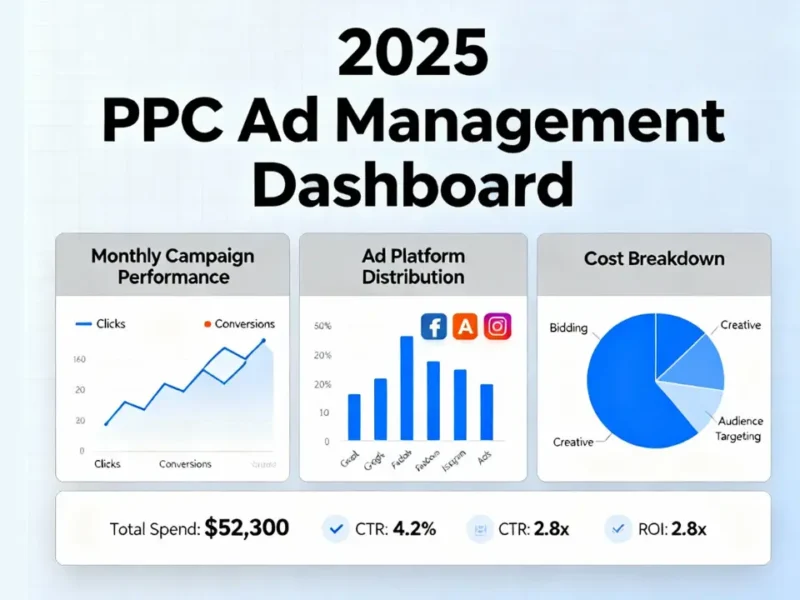
If you’ve ever Googled “how do ppc services work” after seeing your ad spend rise without the leads to match, this guide is for you. In 2025, pay‑per‑click is still the fastest way to capture demand at the precise moment people are ready to act. But results depend on dozens of decisions strategy, structure, keyword intent, bidding, creative, landing pages, tracking, and disciplined optimization. When all of those parts move together, PPC feels like a game‑changer. When they don’t, performance stalls.
Below is a clear, human explanation of how PPC really works today step by step with the vocabulary, benchmarks, and checklists you can use to evaluate any proposal or campaign. By the end, “how do ppc services work” won’t be a mystery; it’ll be a system you can manage or outsource with confidence.
Pro tip: For ongoing practical breakdowns of marketing and tech trends, bookmark ghodkes.com.
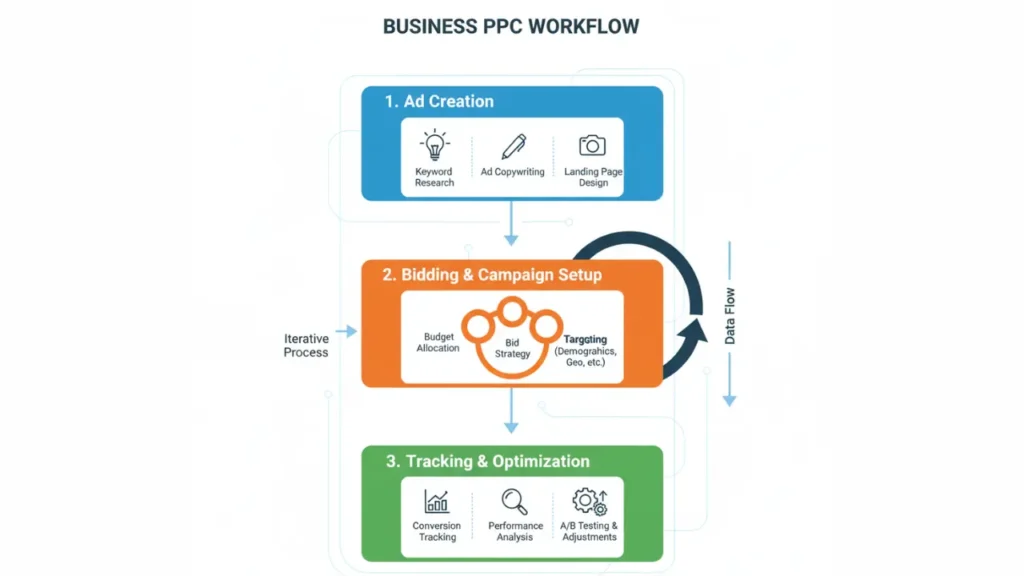
What Is PPC and Why It Still Wins in 2025
Pay‑per‑click (PPC) ads appear on search engines and partner sites. You pay only when someone clicks. Every time a user searches, an auction decides which ads show, where, and at what price. That auction weighs your bid, ad relevance, expected click‑through rate (CTR), and landing page experience. The reason PPC still wins:
- It captures high‑intent prospects at the moment of need.
- It’s measurable every click, lead, and sale can be tracked.
- It scales you can invest more where return is proven.
- It tests messaging faster than any other channel.
Understanding the mechanics behind that auction (and the work leading up to it) is the key to answering “how do ppc services work” in the real world.
The End‑to‑End Lifecycle: How Do PPC Services Work from Day 0 to Ongoing Success?
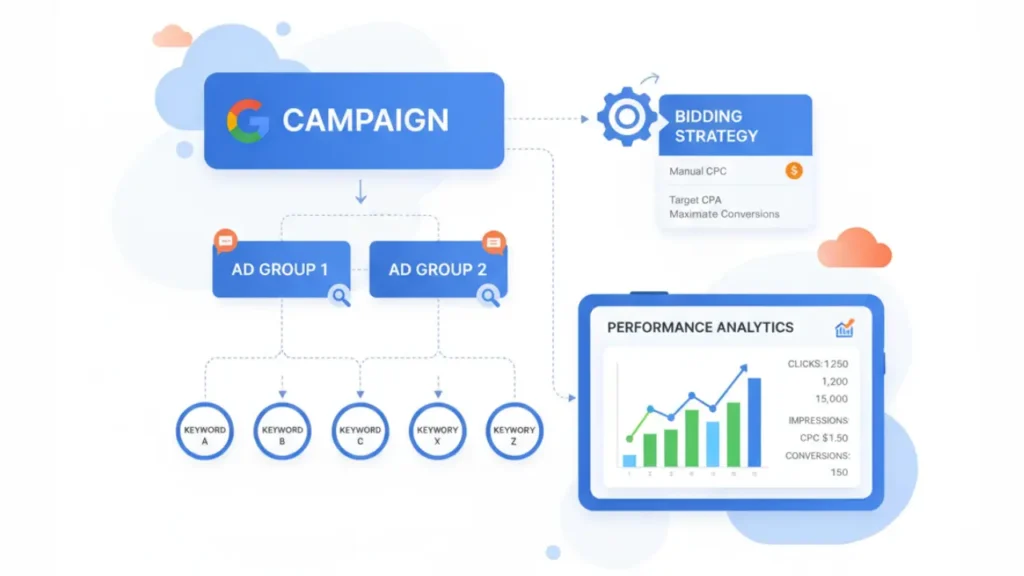
Think of PPC management as a loop: plan → build → launch → learn → improve. Here’s how reputable providers run that loop.
1) Discovery & Strategy (Lays the Foundation)
When clients ask how do ppc services work, the best answer starts with business context not keywords.
- Goals: leads, online sales, demo requests, bookings, store visits
- Unit economics: margins, average order value (AOV), allowable CPA, target ROAS
- Capacity & seasonality: how much demand you can handle and when
- Competitive landscape: who bids on what, and how aggressively
- Compliance: regulated claims, trademarks, geography restrictions
Output you should see:
- A campaign map (Search, Shopping, Performance Max, Display/Discovery, Video)
- Intent themes (brand, generic, competitor, category, long‑tail)
- Messaging angles and initial offers to test
- A measurement plan (conversion types, revenue tracking, phone call attribution)
If a provider can’t articulate this, press pause because “how do ppc services work” without a strategy is “spend and hope.”
2) Tracking & Measurement (If You Can’t Measure It, You Can’t Improve It)
The most important step in how do ppc services work is also the least flashy: measurement.
- Conversion tracking: form submits, calls, purchases, trials, chats
- Enhanced conversions or offline import: connect CRM revenue to ad clicks
- UTM standards: source/medium/campaign/adgroup/ad to match analytics
- Call tracking: unique numbers for ads and pages if phone leads matter
- Consent & privacy: compliant tracking that still captures performance
Deliverables:
- Verified conversions in Google/Microsoft Ads
- Analytics connected; conversion deduplication in place
- A lightweight dashboard (Data Studio/Looker/BI) that updates daily
No tracking, no learning. Full stop.
3) Account Architecture & Keyword Research (Control Comes from Structure)
“How do ppc services work at the account level?” Answer: clear structure.
- Campaigns by network/goal: Search, Shopping, Performance Max, Display/Discovery, Video
- Ad groups by tight theme (1–5 closely related keywords per group)
- Match types: Exact for control, Phrase for scale, Broad when you have strong negatives and data
- Negatives: block junk (free, cheap, DIY, jobs, how‑to if you sell done‑for‑you), and exclude irrelevant brands
Good architecture maps user intent → ad → landing page, one promise at a time.
4) Ad Creation & Extensions (Where Relevance Meets Persuasion)
In any deep dive on how do ppc services work, ad creative quality is non‑negotiable.
- Responsive Search Ads (RSAs): 12–15 headlines, 3–4 descriptions; pin sparingly
- Extensions: sitelinks, callouts, structured snippets, call and location extensions; price and promotion when applicable
- Shopping feed (ecommerce): optimized titles, rich descriptions, accurate attributes, GTINs, high‑quality images
- Display/Discovery/Video: punchy visuals, captions, attention‑grabbing first seconds, clear CTA
Copy principles:
- Mirror the query in the headline
- Lead with benefits, not features
- Add proof (reviews, stats, case outcomes)
- Give one clear next step
5) Landing Pages That Convert (The Silent CPA Killer)
Ads get the click; pages get the lead or sale. Quality Score includes landing experience, so pages affect both CPC and conversions.
Must‑haves:
- Message match: headline and subhead reflect the ad’s promise
- Speed: mobile first, aim <2 seconds to first meaningful paint
- Focus: one CTA; limited distractions; short forms with only essential fields
- Trust: reviews, logos, certifications, guarantees, clear policies
- Evidence: real photos/screenshots; bullet‑point summaries; FAQs
Simple tests that often double conversion:
- Short vs multi‑step forms
- Problem vs outcome‑first headlines
- Hero image vs short explainer video
- Guarantee language and CTA clarity
6) Launch with Guardrails (Start Controlled, Learn Fast)
How do ppc services work on launch day?
- Go live with conservative bids and clear budgets
- Validate that conversions, revenue, and calls are tracking within hours
- Review search term reports daily; add negatives immediately
- Watch Impression Share (lost due to budget vs rank) to decide where to add or cut spend
The first two weeks are about data quality and waste reduction, not “perfect ROAS by Tuesday.”
7) The Optimization Loop (The Secret to Compounding Return)
This is the ongoing answer to how do ppc services work after launch:
- Search term mining: add new winners, exclude losers
- Ad testing: pause low performers; write new challengers; keep learning
- Bidding: start with ECPC or manual; graduate to Target CPA/ROAS when you have stable conversion volume (30–50 per campaign per month)
- Budget shifts: move budget from weak CPA/ROAS to strong pockets
- Segments: adjust by device, location, time of day, audience
- Landing pages: keep A/B testing the biggest lever on CPA
Cadence:
- Daily: budgets, pacing, search terms, anomalies
- Weekly: ad tests, bid/tactic adjustments, audience/placement hygiene
- Monthly: full analysis, creative refresh, new landing tests, new themes
If “how do ppc services work” doesn’t include a relentless optimization loop, it’s not PPC management it’s ad babysitting.
The Auction: Quality Score, Ad Rank, and Why Relevance Lowers Cost
Understanding these three answers 80% of “how do ppc services work” questions:
- Quality Score (1–10): Google’s estimate of relevance and expected performance. Three drivers: expected CTR, ad relevance, and landing page experience.
- Ad Rank: Your bid × Quality Score × impact of ad assets and context. Determines position and eligibility.
- CPC: You often pay just enough to beat the next advertiser’s Ad Rank (not your full bid).
Translation: better relevance and pages lower CPC and increase position. That’s why structure, copy, and landing pages are financial levers, not just “nice‑to‑haves.”
Campaign Types & Where They Shine
- Search: Highest intent; best for core services, high‑intent product queries, and competitor captures.
- Performance Max: Cross‑network automation (Search, Shopping, Display, YouTube, Discover). Great for ecommerce with strong feeds; test carefully for incrementality.
- Shopping: Feed‑driven for ecommerce; title and image optimization are king.
- Display/Discovery: Mid‑funnel reach and remarketing; use frequency caps and tight audiences.
- Video (YouTube): Education and retargeting; pair with search for a “see + seek” strategy.
- Microsoft Advertising (Bing): Often cheaper CPCs; strong for B2B and older demos.
Asking “how do ppc services work across networks?” The best answer: start where intent is highest, expand only when measurement shows incremental return.
Bidding Strategies (Pick the Right Tool for Your Data)
- Manual CPC / Enhanced CPC (ECPC): Control; ideal at launch and for niche/constrained data.
- Target CPA: Automates bids to hit a cost‑per‑lead/sale goal; needs conversion volume.
- Target ROAS: Optimizes for revenue; best for ecommerce with accurate value tracking.
- Maximize Conversions/Clicks: Use with caution; set guardrails (budgets, targets).
- Portfolio strategies: Share goals across campaigns with similar performance.
Rule of thumb: if you’re asking “how do ppc services work with automated bidding,” the honest answer is “great once you feed them enough clean data and keep guardrails in place.”
Budgeting & Forecasting (Set Realistic Expectations)
Simple math beats guesswork:
- Top‑down model: impressions × CTR × conversion rate × AOV/lead value → revenue potential.
- Bottom‑up model: CPC × clicks = cost; clicks × conversion rate = conversions; compare CPA to your threshold.
- Pacing: protect best performers; throttle experiments; align with capacity (don’t buy leads you can’t serve).
Example:
- 8,000 monthly searches × 7% CTR = 560 clicks
- $3.00 CPC → $1,680 spend
- 6% conversion rate → 34 leads
- $120 lead value → $4,080 value → ROAS 2.43× (adjust for sales close rate)
Reporting That Actually Helps You Decide
Great reports answer how do ppc services work this month and what’s changing next month:
- Performance summary: spend, clicks, conversions, CPA, revenue, ROAS
- Context: impression share, lost share (budget vs rank), Quality Score trends
- Insights: winner/loser keywords, ad variants, audiences, devices, locations
- Actions: what was changed, what’s planned, and expected impact
Avoid slide decks with only vanity metrics. You’re paying for decisions, not screenshots.
Pricing Models for PPC Management (Pros & Cons)
“How do ppc services work with pricing?” Common approaches:
- % of spend (10–20%)
- Pros: scalable; aligned with volume
- Cons: can incentivize higher spend if not carefully managed
- Flat fee (tiered)
- Pros: predictable cost; good for control
- Cons: must ensure scope matches complexity
- Hybrid (flat + small %)
- Pros: balances predictability with scale
- Project fees
- For audits, builds, or migrations
Regardless of model, insist on clarity: hours, deliverables, response times, landing page scope, and what’s excluded.
Real‑World Case Snapshots (Anonymized)
Ecommerce (Home Goods), $6M ARR
- Problem: High cart‑abandonment; PMax eating branded searches.
- Work: Split branded search; optimized Shopping feed (titles/images); new product‑specific landing pages; negatives to de‑duplicate; Target ROAS on proven sets.
- Results (120 days): ROAS from 2.9× → 4.6×; CPC −18%; revenue +31% at same spend.
B2B Services, $4k/month budget
- Problem: Low quality leads; last‑click bias hiding value.
- Work: Exact/phrase match only at start; new landing page with short form + scheduler; CRM import of MQL/SQL; switched to Target CPA once stable.
- Results (90 days): CPA −37%; qualified lead rate +22 pts; sales accepted leads doubled.
Local Clinic (3 locations)
- Problem: Calls untracked; wasted spend on after‑hours.
- Work: Call tracking + schedules; ad schedule to business hours; location‑specific pages; review snippets.
- Results (60 days): Cost/call −28%; booked appointments +19%; CTR +2.4 pts.
These snapshots show how do ppc services work when structure, creative, and landing pages align and tracking validates real business outcomes.
Common Pitfalls (and the Fix)
- Too many keywords per ad group. Fix: 1–5 tightly related terms; write matching ads.
- No negatives. Fix: weekly search term reviews; build shared negative lists.
- Automated bidding too early. Fix: wait for stable conversion volume; use ECPC first.
- Home page traffic. Fix: dedicated landing pages for each intent.
- Slow mobile pages. Fix: compress images, reduce scripts, simplify layout.
- No call tracking. Fix: dynamic numbers by source; track duration.
- Reporting without actions. Fix: require “what changed and why” in every update.
Every one of these mistakes raises CPA or hides opportunity.
Compliance & Brand Safety
- Follow platform policies claims, trademarks, restricted categories.
- Avoid unsafe placements on Display/Video; use content exclusions.
- For regulated industries: pre‑approve ad copy and landing pages; document required disclosures.
A professional answer to how do ppc services work includes protecting your brand while you grow.
How PPC Plays with Other Channels
- SEO: use PPC query data to inform content; SEO improves conversion on organic traffic.
- Email/SMS: nurture and retarget; bring back cart abandoners and quote‑waiters.
- Social: test creative/offer hooks; build audiences; retarget video viewers via search.
- Content/Video: educate earlier; retarget engaged visitors with high‑intent search.
The most profitable programs cross‑feed insights weekly.
Quick Reference: Jargon to Know (Plain English)
- CTR: Click‑through rate % who click after seeing the ad
- CPC: Cost per click
- CPA: Cost per acquisition (lead/sale)
- ROAS: Revenue ÷ ad spend
- Impression share: % of eligible impressions you captured
- Exact/Phrase/Broad: Keyword match types controlling how closely a query must match
- Negatives: Words that block irrelevant searches
- Quality Score: Relevance/experience score (1–10) that influences CPC and position
When someone asks how do ppc services work, this glossary helps the whole team speak the same language.
Final Thoughts: Turning Clicks into Customers Reliably
The best answer to “how do ppc services work” is simple: it’s a disciplined system. Strategy matched to your economics. Tracking that won’t lie. Intent‑led structure. Persuasive ads. Fast, focused pages. A weekly optimization loop. Clear reporting tied to actions. When all of that is in place, search ads become a lever you can push with confidence and the phrase “Here’s Why It’s a Game‑Changer” finally makes sense.
If you want more practical explainers and honest comparisons of what’s working right now, add ghodkes.com to your reading list. Then take this guide, ask sharper questions, and build the PPC program your business deserves.
FAQs
How do ppc services work for a brand‑new account?
Start with strategy and tracking, build tight Search campaigns around highest‑intent themes, launch with ECPC/manual bids, check search terms daily, add negatives, and adjust landing pages quickly. Expand only when initial pockets prove CPA/ROAS.
How do ppc services work if we have a long sales cycle?
Track micro‑conversions (demos, content downloads), import offline conversions from your CRM, and optimize to qualified leads (MQL/SQL), not just raw form fills. Use remarketing and YouTube for education.
How do ppc services work with Performance Max?
Feed quality and creative matter most. Provide clean product data, strong assets, and audience signals; protect your brand terms; measure incrementality against your Search/Shopping baseline.
How do ppc services work to lower CPA quickly?
Tighten match types, add negatives weekly, pause wasteful placements, align ad copy to intent, and fix landing‑page friction (speed, forms, trust). Often the fastest gains come from the page—not the bid.
How do ppc services work across Google and Microsoft (Bing)?
Clone winning structure; adjust match types and negatives; monitor cheaper CPC opportunities on Microsoft. Attribution and device behavior differ slightly measure separately.

