

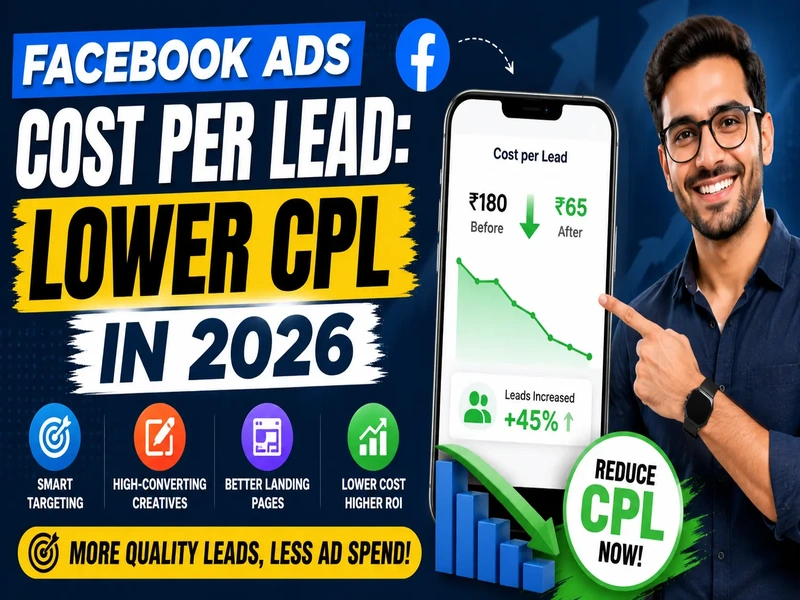
Have you ever looked at your Meta Ads dashboard and wondered, “Why am I paying so much for each lead?”
You’re not alone.
Many business owners increase their ad budget expecting more leads, only to see their facebook ads cost per lead keep climbing. The frustrating part? Spending more doesn’t always solve the problem.
The good news is that lowering your cost per lead isn’t about finding a secret button inside Ads Manager. It’s about making smarter decisions at every stage of your campaign from who you target to where you send people after they click.
If you’re running Facebook or Instagram ads in 2026, this guide will show you practical ways to reduce your cost per lead without sacrificing lead quality.
What Does Facebook Ads Cost Per Lead Actually Mean?
Before trying to reduce it, let’s quickly understand what it is.
Cost Per Lead (CPL) is simply the amount you spend to generate one lead.
For example:
- Spend ₹5,000
- Generate 50 leads
- Your Cost Per Lead = ₹100
A lower CPL is generally better.
But here’s something many businesses miss.
A cheap lead isn’t always a good lead.
If you’re getting lots of people who never answer calls or never buy, even a low CPL becomes expensive.
The real goal is:
Lower your facebook ads cost per lead while improving lead quality.
That’s where profitable campaigns are built.
1. Stop Targeting Everyone
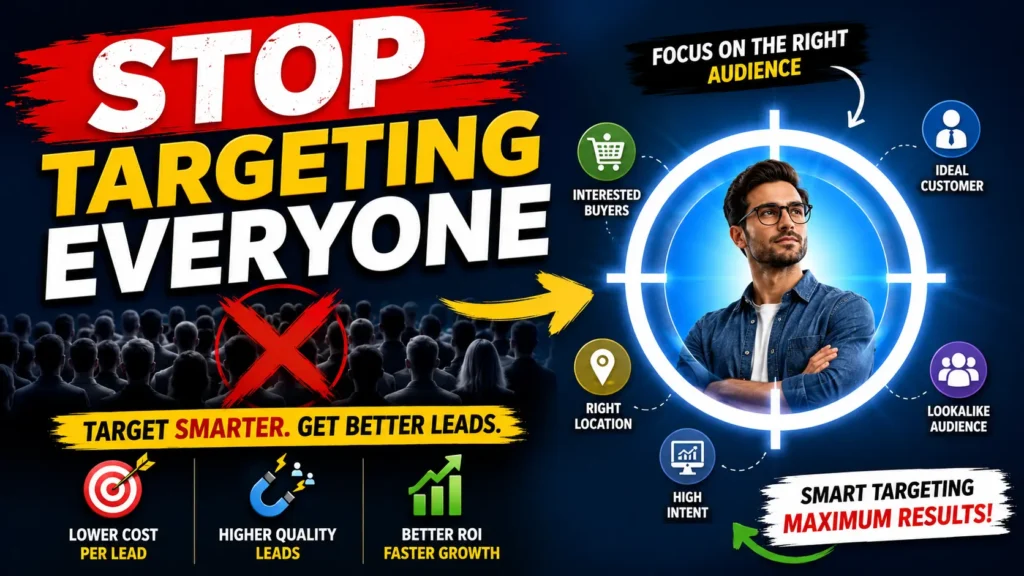
One of the biggest budget killers is broad targeting with no strategy.
Many advertisers choose huge audiences because they think more people means more leads.
Usually, the opposite happens.
Instead, focus on people who are actually likely to buy.
Try targeting:
- Interests related to your product
- Competitor audiences
- Website visitors
- Existing customer lists
- Lookalike audiences based on previous customers
A Lookalike Audience is Facebook’s way of finding people similar to your existing customers.
It’s often much more effective than guessing interests manually.
The more relevant your audience becomes, the less wasted budget you spend.
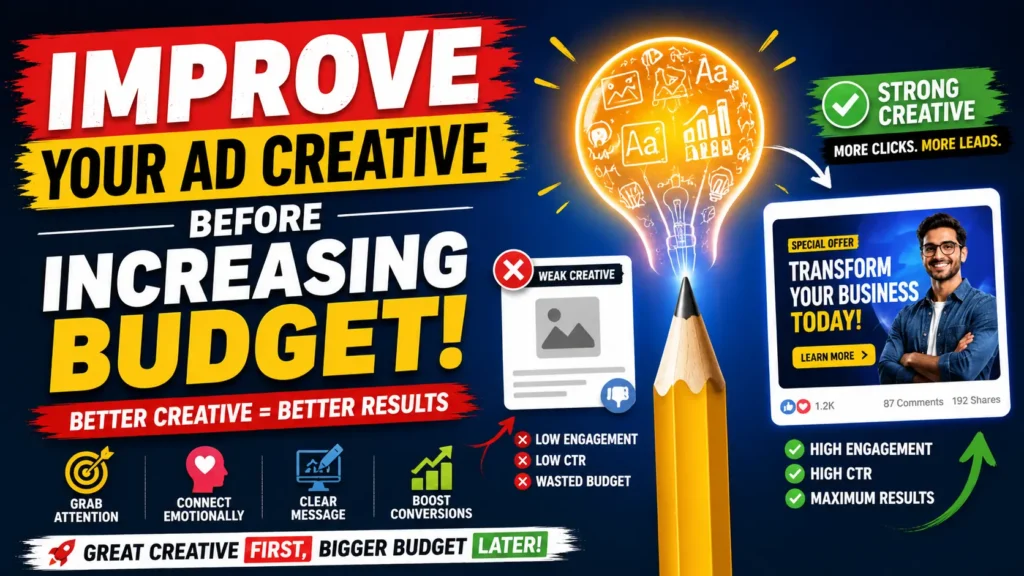
2. Improve Your Ad Creative Before Increasing Budget
Here’s a simple truth.
People don’t click boring ads.
Even the best targeting can’t save weak creative.
Your image or video should grab attention within the first few seconds.
Instead of talking only about your business, focus on your customer’s problem.
For example, avoid:
“We provide digital marketing services.”
Try something like:
“Still paying too much for every lead? Here’s how businesses are cutting their Meta Ads costs.”
Notice the difference?
The second version immediately speaks to a problem.
A few creative ideas that often perform better include:
- Before-and-after comparisons
- Customer success stories
- Short educational videos
- Problem-solution graphics
- Behind-the-scenes content
- Founder videos
People buy from businesses they trust.
Human content usually beats polished corporate content.
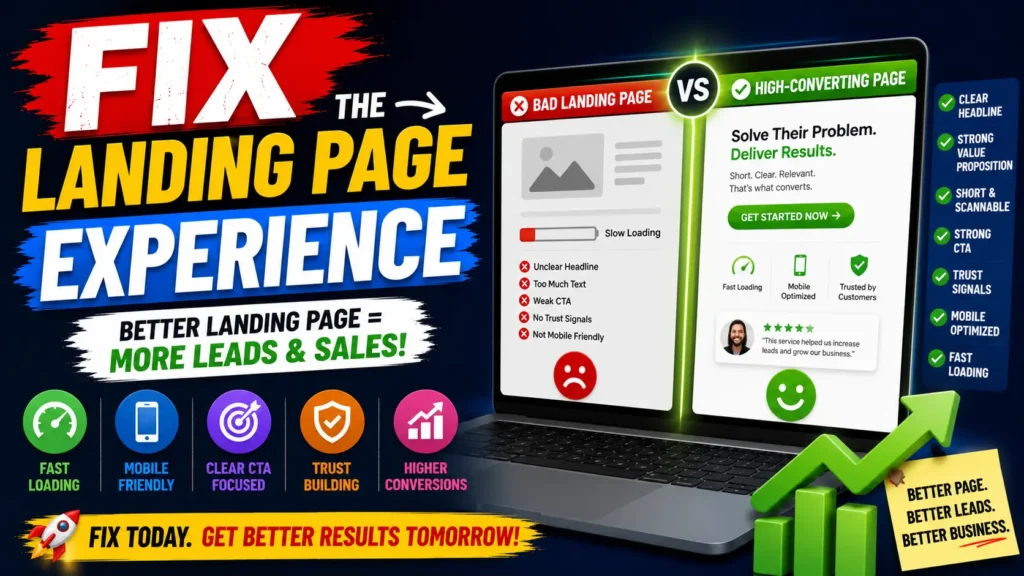
3. Fix the Landing Page Experience
Many businesses blame Facebook when the real issue starts after the click.
Imagine someone clicks your ad.
Then your page takes six seconds to load.
Or the form has fifteen fields.
Or there’s no clear call-to-action.
Most visitors leave.
Facebook notices that users aren’t engaging and starts charging more because your campaign performs poorly.
A good landing page should:
- Load quickly
- Match the message in your ad
- Have one clear objective
- Include trust signals like reviews or testimonials
- Keep forms short
- Work perfectly on mobile
Think of your landing page as the salesperson after your advertisement.
If that salesperson is confusing, your advertising budget suffers.
4. Let Facebook’s Algorithm Learn
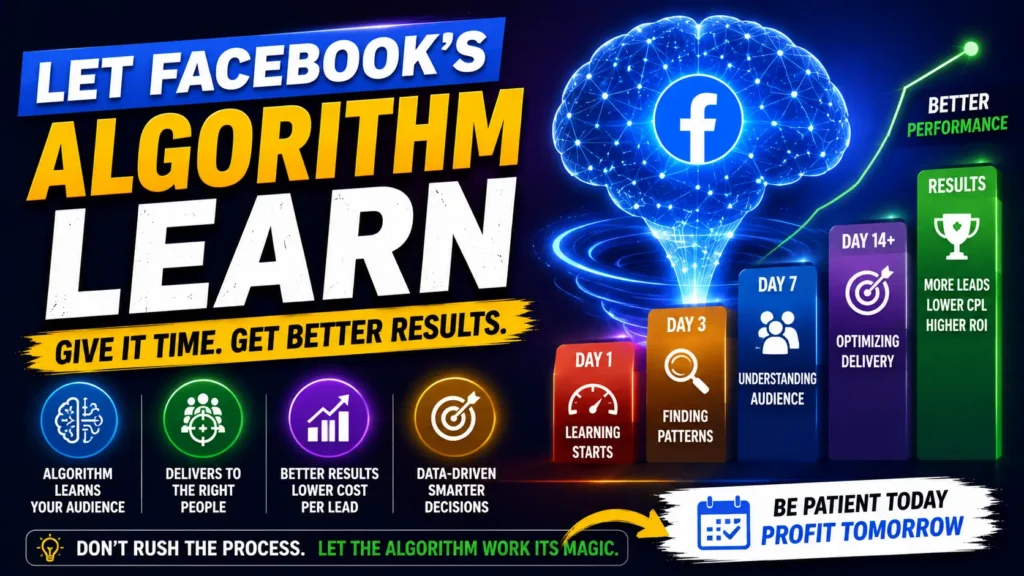
This is one mistake we see all the time.
Businesses launch a campaign.
Then they change the audience after one day.
Next day they change the budget.
Then they replace the creative.
Then they change the objective.
Facebook never gets enough time to optimize.
Every major edit resets the learning process.
The learning phase is when Meta collects enough data to understand who is most likely to convert.
If you keep making changes, it has to start over.
A better approach is:
- Launch the campaign.
- Give it enough data.
- Watch the results.
- Make one change at a time.
Patience usually costs less than constant tweaking.
5. Track the Right Metrics
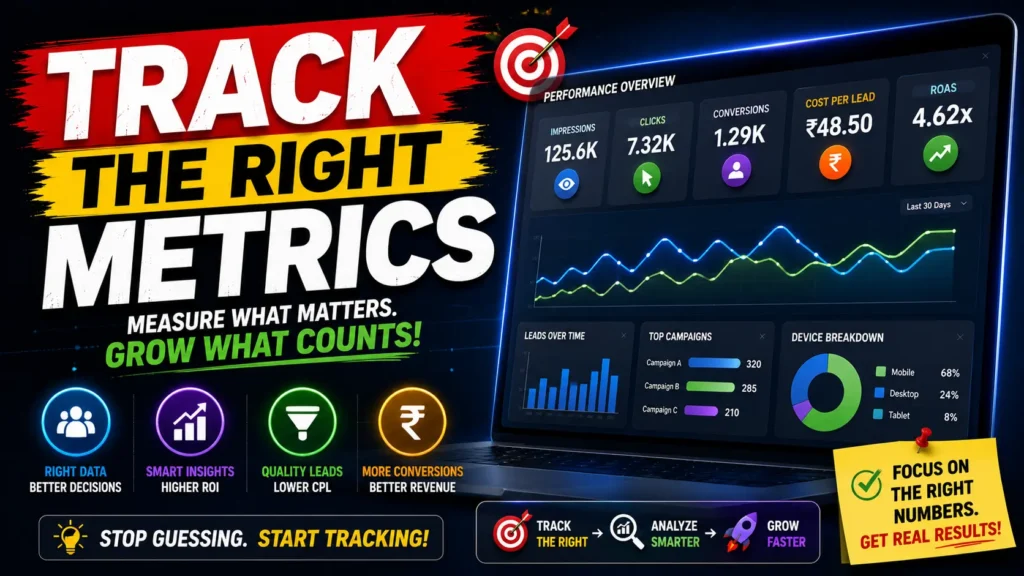
Many advertisers celebrate cheap clicks.
Clicks don’t pay the bills.
Leads do.
Instead of focusing only on CPC (Cost Per Click), monitor:
- Cost Per Lead
- Landing page conversion rate
- Lead quality
- Cost per qualified lead
- Conversion rate
- Return on Ad Spend (ROAS)
ROAS simply measures how much revenue you generate for every rupee spent on advertising.
When you track meaningful metrics, better decisions become much easier.
A Simple Example
Let’s say we work with a Mumbai-based clothing brand.
Their campaign generates plenty of clicks but very few enquiries.
Instead of increasing the budget, we review the entire funnel.
We discover:
- The audience is too broad.
- The landing page loads slowly.
- The form asks for unnecessary information.
- The ad headline doesn’t explain the offer clearly.
We improve those areas.
The campaign begins attracting more qualified enquiries without increasing ad spend.
Nothing magical happened.
The campaign simply became more relevant.
That’s often how lower CPL happens.
Common Mistakes That Increase Facebook Ads Cost Per Lead
Sometimes reducing costs is more about avoiding mistakes than finding new tricks.
Watch out for these:
Running Too Many Ad Sets
Small budgets spread across many ad sets leave Facebook with very little data.
Fewer campaigns often perform better.
Ignoring Existing Customers
Retargeting usually costs less than finding brand-new customers.
People who already know your business are more likely to convert.
Weak Offer
Even perfect targeting can’t fix an offer people don’t want.
Ask yourself:
“Why should someone fill out my form today instead of tomorrow?”
Give them a reason.
No Testing
Don’t assume your first advertisement is your best advertisement.
Test:
- Headlines
- Images
- Videos
- Primary text
- Call-to-action buttons
Sometimes one small change makes a noticeable difference.
The Bigger Picture
Lowering your facebook ads cost per lead isn’t about chasing shortcuts.
It’s about improving every part of your marketing system.
Better targeting.
Better creatives.
A stronger offer.
A faster landing page.
Clear tracking.
Small improvements in each area usually create much bigger results than one major change.
Businesses that consistently review and optimize their campaigns almost always outperform businesses that simply increase budgets whenever results slow down.
Advertising platforms will continue evolving in 2026, but one thing won’t change.
Relevant ads shown to the right people will always outperform average ads shown to everyone.
Ready to Reduce Your Facebook Ads Cost Per Lead?
If you’re tired of spending money on Meta Ads without getting consistent, qualified enquiries, we’d be happy to take a look.
At SparXcellence Ghodkes, we help businesses build Meta Ads and Google PPC campaigns designed to generate quality leads—not just clicks.
We’ll review your current campaigns, identify what’s increasing your facebook ads cost per lead, and show you practical opportunities to improve performance.
Book a FREE strategy call and get a no-obligation marketing audit.
Or simply message us on WhatsApp if you have a specific question. Sometimes one small improvement is all it takes to turn an average campaign into a profitable one.
Frequently Asked Questions
What is a good Facebook Ads Cost Per Lead?
There isn’t one universal number.
A good CPL depends on your industry, product price, competition, audience, and sales process.
Instead of comparing yourself with another business, compare your current campaigns against your previous performance.
If you’re consistently improving lead quality while lowering costs, you’re moving in the right direction.
Should I always choose the cheapest leads?
No.
Qualified leads are far more valuable than cheap leads that never convert.
Paying slightly more for better prospects usually delivers stronger long-term returns.
Does increasing budget reduce Cost Per Lead?
Not automatically.
Scaling a campaign before it’s optimized often increases costs.
Fix the campaign first.
Then increase the budget gradually.
Should I use Facebook Lead Forms or a Landing Page?
Both can work.
Lead Forms usually generate more enquiries because people stay inside Facebook.
Landing pages often produce higher-quality leads because visitors take an extra step before submitting details.
Test both and measure actual business results.